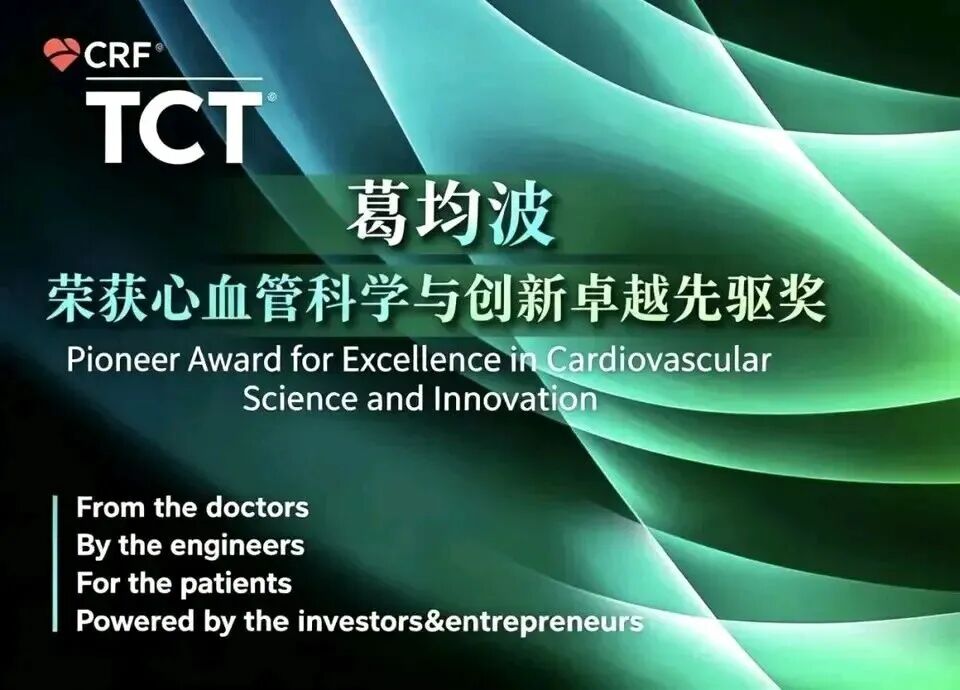
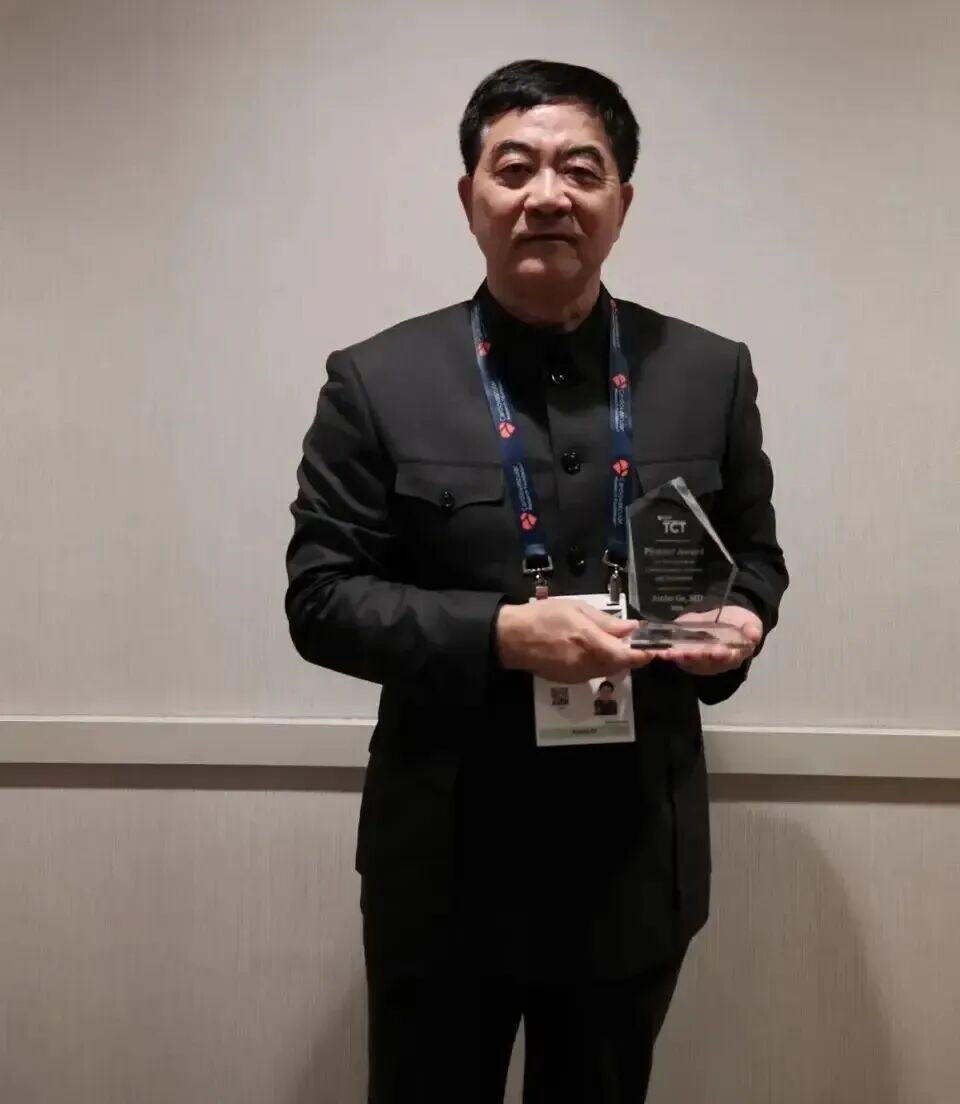
At the opening of TCT 2026 (the 38th Transcatheter Cardiovascular Therapeutics Conference) in San Diego on October 31, 2026 local time, the inaugural Pioneer Award for Excellence in Cardiovascular Science and Innovation was presented. Professor Ge Junbo, Member of the Chinese Academy of Sciences and President of Qingdao University Affiliated Rizhao Hospital / Rizhao International Heart Hospital, became the first Chinese scholar to receive this newly established honor.
This prestigious award recognizes trailblazing leaders whose scientific discoveries and device innovations have shaped the evolution of cardiovascular medicine.
This landmark award caps an extraordinary October for Professor Ge:
October 10, Rio de Janeiro: Elected President-Elect of the World Heart Federation, marking the first time a mainland Chinese scholar has joined the Federation’s core governing board (term: 2027–2028).
October 23, AICT‑AsiaPCR 2026: Received the Chien Foundation Lifetime Achievement Award for Cardiovascular Interventions.
October 31, TCT 2026, San Diego: Honoured with the Pioneer Award.
Such a concentration of top-tier international awards is rare across global cardiology.
Professor Ge’s breakthroughs grew from clinical curiosity. During his research in Germany, he identified the intravascular ultrasound “half-moon sign” of myocardial bridges, lifting detection rates from under 5% by conventional coronary angiography to over 95%. Known internationally as the “Ge Sign”, this finding has been incorporated into leading global cardiology textbooks.
He pioneered the reverse wire technique and associated methods for chronic total occlusion (CTO), once regarded as the “last fortress” of coronary intervention. His innovation raised procedural success rates from 60–70% to above 90%, and it is now one of three standard CTO intervention approaches worldwide.
Professor Ge led the development of China’s first degradable-coating stents, the world’s first arsenic trioxide drug-eluting stents, and Xinsorb, China’s first fully bioresorbable coronary stent.
Xinsorb was first implanted in 2013, approved for clinical use in 2020, and won the Grand Prize at the China International Industry Fair in 2023. Once it supports vessel remodelling, the stent gradually dissolves inside the body, allowing the artery to regain its natural function — the core vision of “implant-free intervention”: ideal therapy leaves no foreign material behind and restores native physiology.
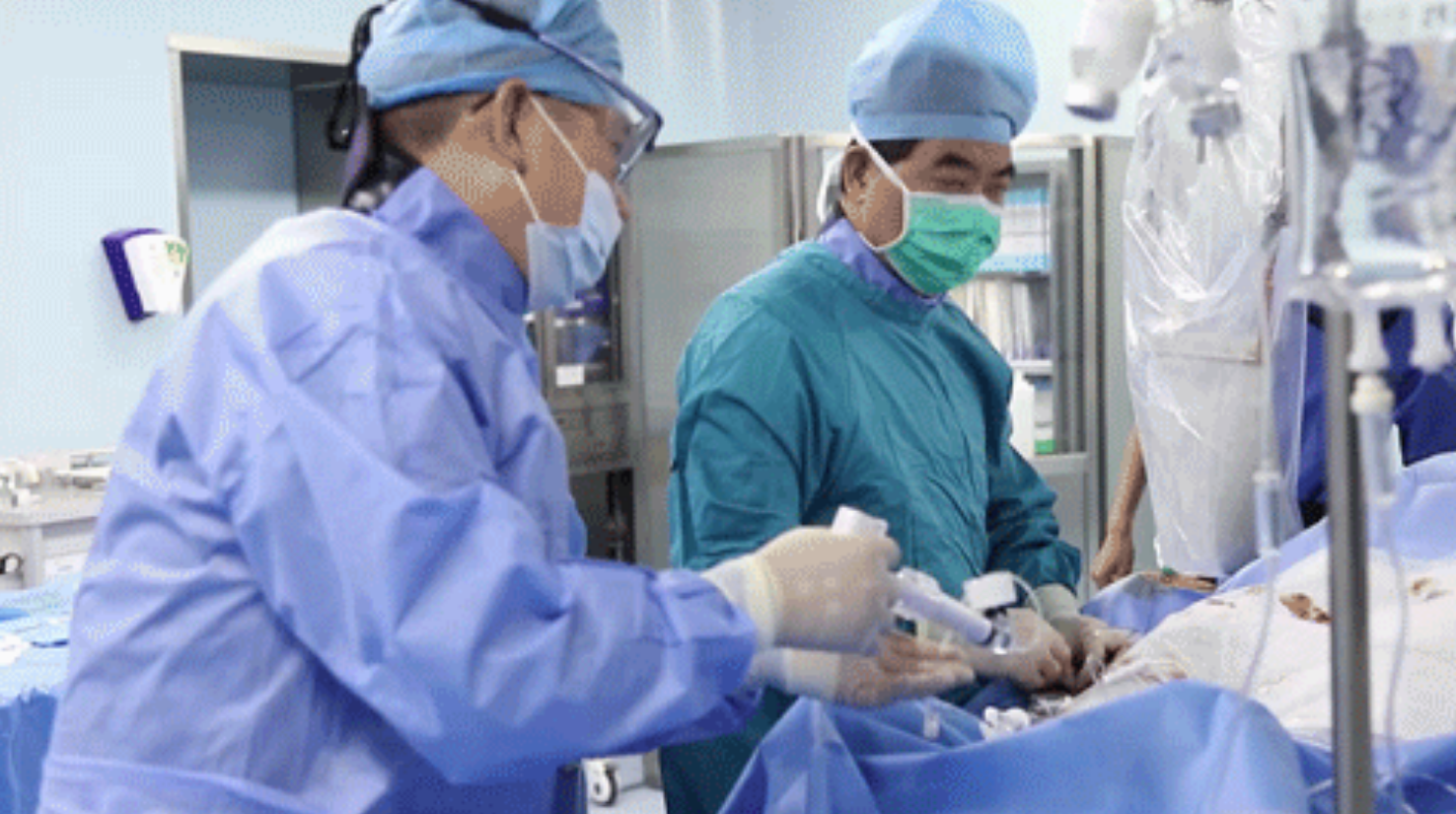
Valve disease once relied on high-risk open-heart surgery unsuitable for many elderly patients. Professor Ge spearheaded domestic minimally invasive valve innovation, including China’s first transcatheter aortic valve replacement (TAVR) in 2010, Asia’s first transcatheter mitral edge-to-edge repair in 2012, and the world’s first transapical mitral clip procedure in 2018.
Building on this momentum, the Lunan Heart Valve Centre was launched at Rizhao International Heart Hospital in September 2026. The centre has performed technically demanding procedures including the nation’s first dedicated management for aortic regurgitation and TAVR in patients with severely reduced ejection fraction (EF 17%). It also explores combined therapies such as TAVR plus CCM and dual-valve intervention to improve long-term quality of life for vulnerable patients.
Professor Ge’s impact extends far beyond individual operations. In 1999, he established the first emergency pathway for acute myocardial infarction in East China and championed the national Chest Pain Centre network. Today, more than 5,000 centres operate across China, cutting in-hospital mortality from acute myocardial infarction from 10.1% to 3.7%.
He proposed the concept of “pan-vascular medicine” for integrated prevention and treatment of coronary, cerebral and peripheral vascular disease. Through Belt and Road interventional training programmes, he shares Chinese clinical expertise globally and nurtures young interventional cardiologists.
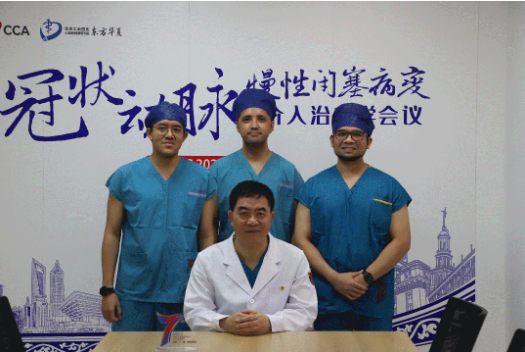
Rizhao International Heart Hospital has completed over 10 procedures that are firsts for Shandong Province and more than 60 firsts for Rizhao City — ranging from the national debut of the TaurusTrio system to Rizhao’s first artificial heart implantation. The hospital has transformed local cardiovascular care, eliminating the need for many patients to travel out of the region for complex heart surgery.
Previous article:China's Heart, Heard Around the World: Professor Ge Junbo Elected Pres...
Next article:No more

No. 1 Linyi Road, Rizhao City, Shandong Province (Opposite the Municipal Technician College)